Sunday, February 24, 2013

February of 1952, and of 2013


Building an apartment building on Road 3

The Sunny Side

The Shady Side

Walking the Family Dogs

A Convoy of Cement Trucks
I thought you all would appreciate a little update on our working life here in the Delta.  Fortunately, all those college degrees keep me from having to carry anything on my head.

We have had spectacular weather lately, breezy and in the 70s.  Gail has gone with students on a Mekong Delta tour in Cambodia, and Millie is with a similar group, washing elephants in Thailand.  Last week her IB seniors held their productions--each kid has to write, direct and produce an original theatrical performance. We got to see some good stuff.  And the week before that we took twenty kids to a theater festival in Bombay.

I wanted to let you know everything is fine, although there have been a number of demonstrations lately, and we understand Bangladesh is getting some international press.  Here what is happening locally.

East Pakistan was always a problem, and in 1952, when West Pakistan declared Urdu, a Hindu/Arabic dialect common on the western sub-continent, to be the official language, people here demonstrated for their own language, Bangla (or, just across the border in Calcutta, West Bengal, Bengali).  Five university students were killed by the Pakistani army during a peaceful protest.  The world's first language martyrs were celebrated again this past weekend.

In 1971, people here declared independence.  The Pakistani army, in responding to the revolt, committed a number of atrocities.  They eventually sought the assistance of Jamaat Islam, a local Islamist party, who carried out systematic rapes and murders.  Finally, India sent in an army, the war ended, Pakistan and India left.  Most of Jamaat Islam stayed.

Over the years Jamaat's leaders have managed to play one party off against the other so as to avoid war crimes trials.  They are currently aligned with the BNP, the out-of-power party who usually calls the hartals or strikes.  But they have also been aligned with the Awali League, the in-power party.  

Finally, after 40+ years, the trials are happening now.  The trials are continuing, and some have been convicted, including one of their leaders currently hiding in Pakistan.  Jamaat, without arguing the veracity of the verdicts, has been attacking police, threatening to begin a civil war and vandalizing public places.

Meanwhile, totally separate from the political parties and the violence, a new grassroots movement, led by bloggers, has emerged.  They are rejecting any connection to either political group, but are calling for the death penalty for those convicted.  One of their founding bloggers was recently murdered, and these grassroots Shahbagh demonstrations (named for a downtown intersection) are getting larger and stronger, but have stayed peaceful.  People my age, who have lived here a long time, tell me this is a historic moment, that the spirit of '71 and '52 is being revived now.

I'll keep you posted.  

Friday, January 25, 2013

Fall 2012--Winter 2013

Bali: Just Weird Enough

Gamlan Musicians

At the Culture Center


Life in the Slow Lane: The Subcontinent
Fall 2012 into Winter 2013

Yes I know…you thought we must have fallen off the Earth.  Well, we haven’t, but we have been busy here in the Delta. 

School is mostly what we do between vacations.

During the first six weeks of the school year, Gail produced a children’s play (the US Ambassador loved it), Millie set school records in swimming, and I looked after the new teachers and kids at AISD.  Also, Millie went to Chennai (India) for the South Asia International School Association (SAISA) swim meet and Gail went to a theater workshop in Bangalore (also in India). 

The Romance of Travel (Part One)

Usually in Asia, you tell and show the taxi driver where you are going, you get there.  Assuming Krabi, Thailand, was like everywhere else, I didn’t call ahead. 

In Krabi, there were no taxis.  When I went back into the airport, my phone could not connect to the hotel.  So we paid 150 Thai baht ($5.00) to ride on a bus for about half an hour until we arrived at a seaside restaurant with a ticket booth in the parking lot.  That’s where you buy the ($3) “boat” ticket. 

It was mid-afternoon, sunny and warm.  Exactly what you would expect on a tropical beach. 

The “boat” was a long tail boat anchored about 200 yards away.  While those high tides of Hurricane Sandy were hitting NY, this place was having way low tide.  The beach, a mile across, exposed a ribbon of sand at high tide, but that was a small portion compared to the expanse of mud and broken coral between us and the boat. 

We considered our options, bought our tickets, changed clothes and began the trek across the mud and rock.  Every step created a slurping sound, and Millie carried her suitcase on her head, Bangladeshi-style.  By the time she got to the boat, she was in waist-deep water.  Eventually, there were a dozen people and their luggage, mostly tourists but a local family, too.  We were dropped off in knee-deep water, about 20 yards from a nice beach with several hotels.  Ours was the last one on the beach, a great view from the pool and bar, a decent breakfast and terrific gardens and paths. 

So we had a great time, getting sunburns around the pool, and walking to the little row of shops and back several times a day, and admiring the sunsets.  The three of us did a day of snorkeling and boating around Phi Phi Island.  Millie and I kayaked for a couple hours around the cup cake shaped islands that appear to jump up out of the water.  And Gail noticed other guys my age checking in with their Asian daughters, too. 

Then we came back to Dhaka…Gail directed her second play, Fools, a Neil Simon comedy (the Ambassador loved this one so much he spoke to each cast member), Millie led the Lady Tigers to a 2nd place finish in the SAISA girls basketball tournament, held at AISD, and Gail and I cheered.  And we prepared for the next vacation: with Abby in Bali.

The Romance of Travel (Part Two)

Bali is the first major island east of Java in the Indonesian Archipelago, about 8 degrees south of the equator and a million miles from anything remotely like Missouri.  Several hundred years ago Indians migrated here, so Bali is Hindu in religion and architecture, Polynesian in climate and vegetation, and, with its proximity to Australia, hard-partying in temperament. 

The Indian migration gave the island a shot of art, dance, music, architecture that has made the place unique in the Muslim world around it.  And it is curious: carved stone statues protecting bridges, and little offerings of flowers, fruit and a stick of incense, placed in prayer on the ground in front of even the tiniest shrine.  

We managed to have a good time.  We started in an ageing but colorful, beachfront resort at Sanor, saw the temple at Ulu Watu perched on a cliff above the sea, hit a couple malls and got sunburned at the pool.  The local beer, Bintang, was cold, taxis cheap and the restaurants reliable: what more could you ask for? 

Sunshine, maybe.  We ended, in the rain, in a new, swank resort on the strip in Kuta.  Kuta resembles some of Daytona Beach: Aussie kids come here for tattoos. 

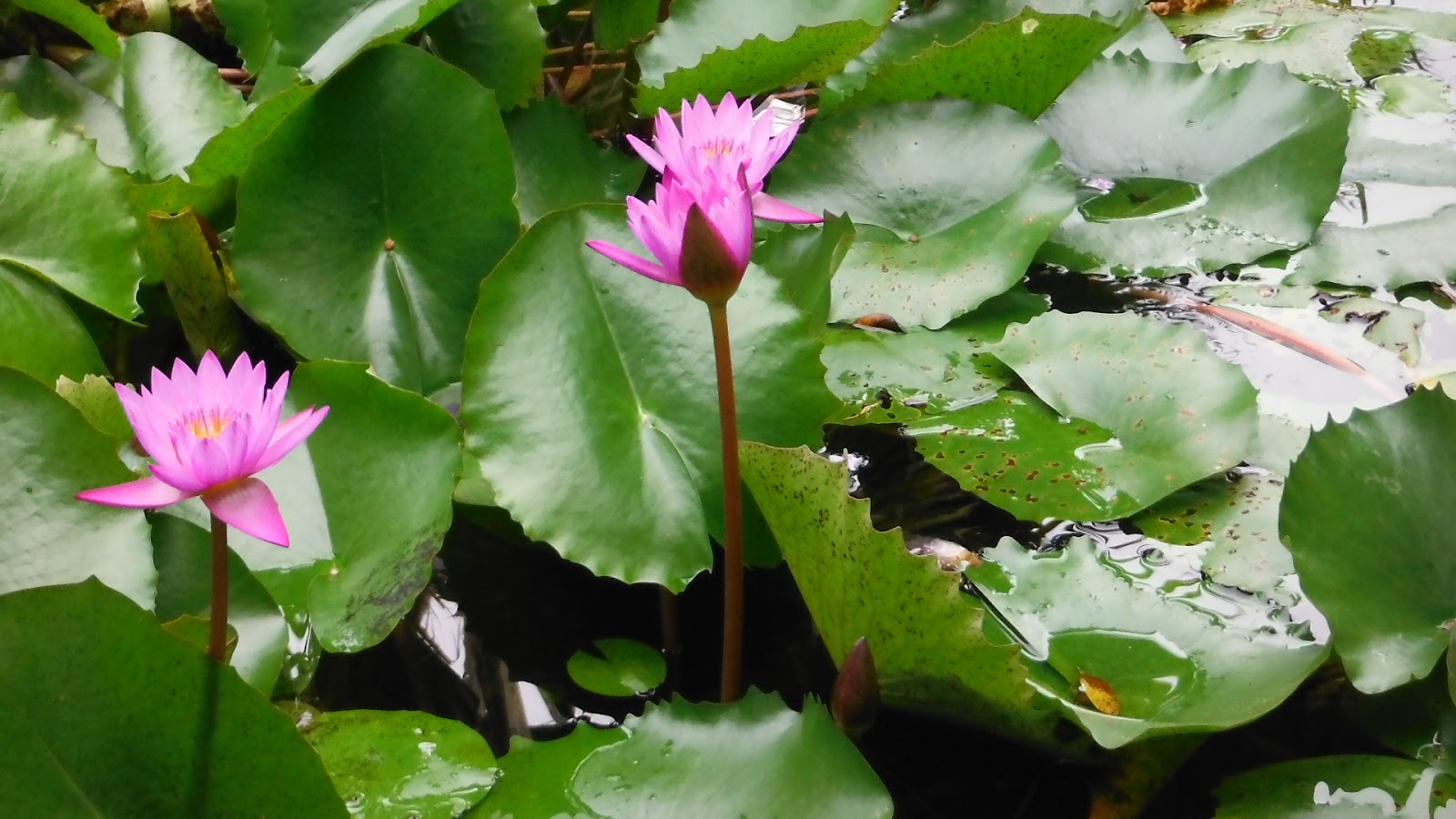
In between, we enjoyed Ubud, the “cultural capital”, (sort of like Branson MO, without the confederate flag bikinis for sale on the sidewalks), with loads of artisans, shops, temples, lily ponds, rice terraces and a Starbucks.  

And we spent a few lazy days in Amed, where the girls got in eight SCUBA dives, two around and through shipwrecks.   We never saw a really nice beach, but we got tanned, read books and had more than a few Bintangs.  And we watched the New Year's Eve fireworks among the coconuts trees and the sea.  

The most memorable event of the whole may have been the rat-sized gecko that inhabited our villa’s rafters in Ubud, pooping daily into a couple square feet of the floor near Gail’s suitcase. 

And of course we brought back tons of stuff.  Gail added five masks to the foyer “mask room” and I added a blowgun to the armament corner; Millie and Abby got shoes and shirts and a dress or two.   And Abby was able to spend a few days in Dhaka before heading back to the USA. 

Our friend, Sabrina, arrived from India the day before Abby left.  Sabrina, a Woodstock dorm parent, had dressed Abby and five of her friends plus Gail) in their silk saris for Commencement.  (No easy task—she started at 7:00 AM and finished just in time for the photo session at 9:00.)  So we got to show her sunny Dhaka and a little of AISD before she headed off to Nepal for the non-tropical part of her trip. 

Abby and her college friends are renting a house in Kirksville MO.  Millie played a four-mallet xylophone piece for the elementary school assembly, and Gail is the executive producer of the IB students’ productions.  She and I will chaperone twenty kids on an International Schools Theater Association trip to Mumbai in early February.  In late February Gail takes 20 or so kids on a “Discovery Week” trip up the Mekong in Cambodia.  Millie goes to Chang Mai Thailand to see villages and wash elephants.  And I am still living the dream here in Dhaka…360 little kids treat me like I’m a rock star. 

Next family vacation, in early April, looks like Sri Lanka or Nepal.  

Dancin' in Bali


Cleansing the soul

Ubud, Bali Barong Dance

The Beach at Sanor, Bali

Our hotel in Amed

Saturday, September 15, 2012

September 15, 2012: All quiet here in the enclave.


We wanted everyone to know that we are fine and safe here in Dhaka.  The embassy has sent out warnings about the possibility of unrest, but also that they have not been advised of any new dangers.  Things, of course, are not well in North Africa or parts of the Middle East.  Even Australia has seen violent demonstrations--we were in Sydney six weeks ago and thought it was incredibly calm.

Tonight, for instance, we went to the opening of an art gallery--the grandmother of one of Gail's students owns the gallery (and the building)--so we got to see some expensive locally produced art.  Well, more expensive than anything we own that would be considered art.  Several hundred or thousand dollars for original oil paintings, for instance.  Everyone was gracious.

And we went shopping this afternoon and saw no evidence of any unrest, except that we did notice more beefy young American men, apparently Marines on their day off.  Last night one of the other administrators told us she saw a demonstration in front of the US Embassy (six blocks away), but thought it was a parade.

One of the reasons things here are not in the uproar that other Moslem countries have experienced is that, for one, this is a moderate, secular society with a tradition of tolerance.  The other reason, I think, is that most people are so poor that they have no time for politics; just living is enough of a struggle.  To get an idea of the place, check out this link: http://www.nytimes.com/2012/09/10/world/asia/killing-of-bangladesh-labor-leader-spotlights-grievances-of-workers.html?_r=1&partner=rss&emc=rss&src=ig

No, it's not Venice.
You can also check out these pictures from an August trip into the city with the new teachers.
The Banana Man

The Bangladesh Parliament

More Waterfront

The Music Store

The Fish Seller

At the Vegetable Market

School Children of Hindu Street

The Streets of Dhaka


Friday, August 31, 2012

Return to Paradise, Or How We Spent the Kids' Inheritance: Final Chapter


Chapter Six: Down Under and Back

Trinity Beach
Trinity Beach, Queensland, Australia, just north of Cairns and opposite the Great Barrier Reef, became our home for six days.  Trinity is beautiful—palm trees (with the coconuts thoughtfully removed) line a half-mile strip of sand beach between two rocky points.  The Coral Sea lapped at the beach less than 50 yards from our balcony and windows.  Restaurants and bars sat at the corner of the next intersection, a block or so down the beach, along with a convenience store and car rental place.  And I was the youngest guy in town---like Phoenix with a beach and a rain forest.   
Trinity Beach and Tablelands

We drove the coast road—the Captain Cook Highway, with lots of curves and hills along the sea north toward Port Douglas and Cape Tribulation.  (Captain Cook had some trouble here.) The “tablelands” meet the sea in stunning cliffs, and we stopped at one scenic lookout place to watch parasail guys take off from the cliff. 
 The other thing we saw that day was Mossman Gorge, a national park around a rushing mountain stream and rain forest preserve.  A red headed turkey-like bird followed the tourists down the path to the stream; on the way we saw a tree snake, but that was about it for wildlife.  Wallabies, small kangaroo-like mammals, could be seen along the road near Trinity Beach, as well. 
Road Side Wallabies

The only cloudy, rainy day was the day we booked an all day snorkel/SCUBA trip.  On the way to their dive moorings on the reef, the girls filled out medical forms, and Abby made the mistake of mentioning that she had had childhood asthma.  That disqualified her from SCUBA, but she and Gail snorkeled while Millie dived.  It was too rough for my seasickness and me to enjoy.  The clouds cleared as we returned to Cairns, and it was beautiful again.  So we got some gelato before the night market opened.


Our next-to-last day, we drove up into the tablelands and saw yet another waterfall, then spent the balance of our Trinity Beach time laying on the sand and packing for Sydney.  The flight was sort of eventful (Don’t fly Jet Star if you can help it.) with our bags being just overweight enough to get expensive for us and a bother for the check-in person we dealt with.  She left and the bags were okayed by the next check in person.  The flight was full of screaming children, tall Asians with pointy knees—at least the guy behind me—but brief enough that we all survived. 

We scooped up our bags, caught a big taxi and landed in downtown to find that the Meriton Service Apartment on Kent Street near Darling Harbor had overbooked two bedroom apartments, so they gave us a three bedroom, split level, 56th floor, sub-penthouse apartment.  For the first time in six weeks, the girls did not share a room or a bed and Gail had a Jacuzzi bathtub.  And we had an incredible view from the balcony.
From the Penthouse

Sydney was beautiful—mostly sunny and cool with lots to see.  We wandered around late that first afternoon until we came to the Circular Quay, the ferry terminal between the two main landmarks, the Harbor Bridge and the Opera House.  The next day we rode the hop on/hop off buses around the city, then spent the evening walking around the shops next to Darling Harbor before we caught the latest Batman movie at the world’s largest IMAX theater. 

China Garden near Darling Harbor
The next morning we took the Opera House tour, then after a Quay-side lunch, caught the ferry to the Zoo.  The Opera House is a monster—like the Taj Mahal, Notre Dame or the Lincoln Memorial, bigger than you expect, and really a fantastic piece of architecture.  At the gift shop, I could have bought a T-shirt that read: "The sun did not know how beautiful it's light could be until it saw it reflected off this building." But, we got Christmas tree ornaments instead.  
The Opera House

The Zoo is pretty cool as well.  We finally got to see the kangaroos, emus, platypus and exotic birds.  Eventually we caught the ferry back to the city and packed up for the next day’s flight back to Dhaka. 

At the Zoo
We spent the last of the kids’ inheritance at the Sydney airport duty free shops on single malt Scotch, t-shirts, ties and perfume...important stuff.  Eight hours later we were in the Kuala Lumpur's airport, Abby was still working on her last class assignment and charging her computer when we were called to board the last flight—Kuala Lumpur to Dhaka—of the summer. 


Sydney from the Zoo


In the end, Gail and I decided we were blessed to have daughters that turned out to be such good travel buddies.  And, this was the trip of a lifetime—Milford Sound to the Coral Coast to Return to Paradise Beach to the Sydney Opera House.  

Tuesday, August 28, 2012

Return to Paradise, at Last


Chapter Five: Paradise At Last


Samoa
We landed on Upolu, Samoa, about 11:30 PM, managed to get through customs and immigration and into the best hotel of the whole trip: Aggie Grey’s Beach Resort.  This is our only upper class, 5 Star, resort of the trip: a couple restaurants, pool with swim-up bar, golf course being developed, all on the northwest coast of the island, with Savaii in the distance and the gorgeous Pacific all around us.  Of course, the place also comes with lots of screaming under-parented Australian kids…but a small price to pay for Paradise, champagne sunsets right outside our room and the incredible Pacific we had hoped to see. 

The original Aggie Grey’s Hotel is in Apia, the capital city (well, town) down the coast 45 km.  The Hotel has been an institution of renown since WW2 and has seen its share of celebrities.  We stayed there once 30 years, but I don’t remember anything special.  (We missed the weekly floor show and "siva" dance, originally performed by Aggie herself, now performed by her granddaughter.)
Millie at Breakfast

Beach Front at Aggie's

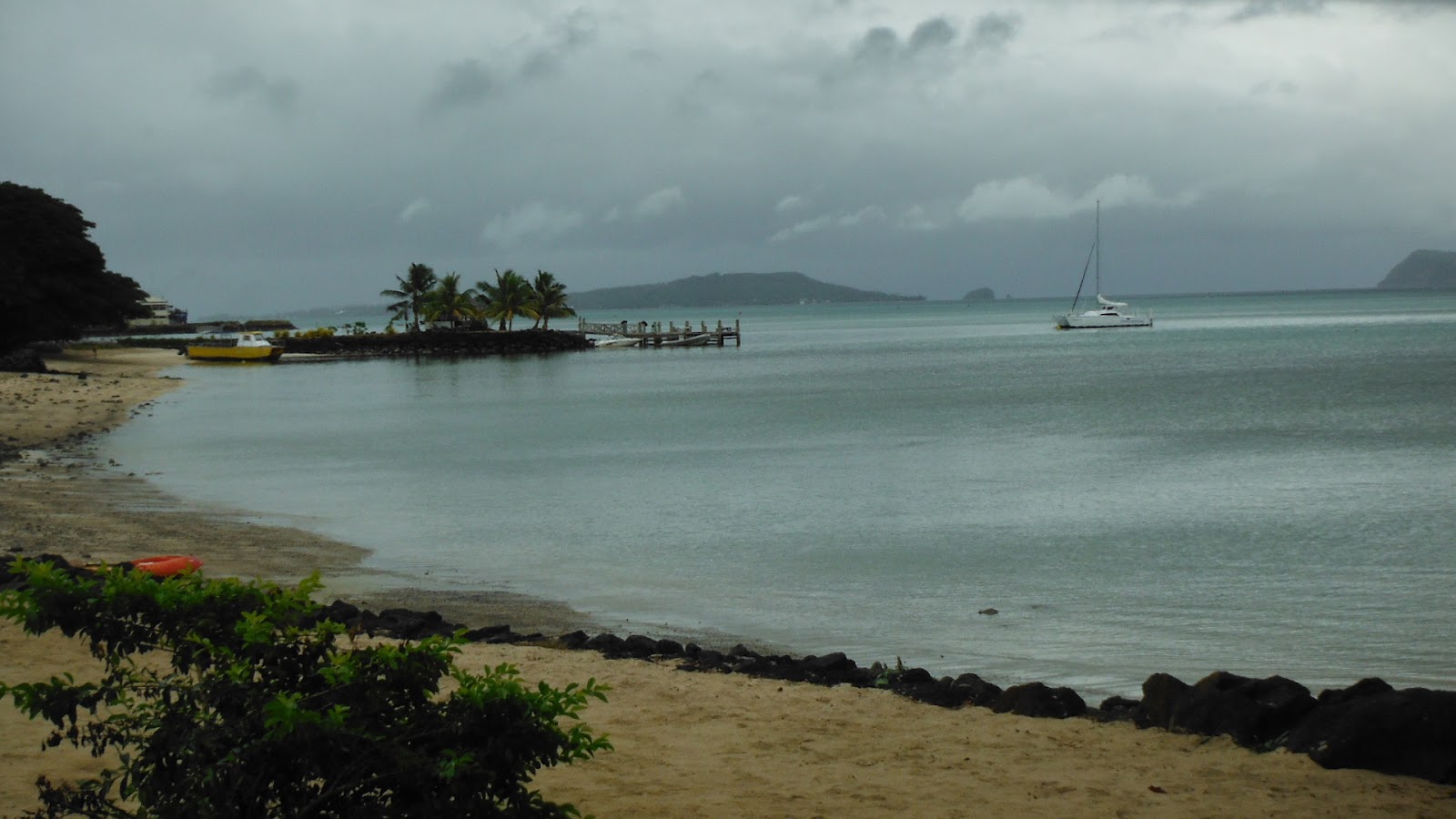
The cloudy weather followed us to Samoa,and we tried hanging out at the pool and working on our tans without success the first day, Saturday July 14.  We studied the possibilities, bought an hour of internet to check the weather, and decided to book snorkeling for us and SCUBA for the girls for Sunday at the dive shop down the beach. 

The weather was still a little cool, cloudy and windy Sunday morning when all of us had our first dives (girls SCUBA, Gail and I snorkeling), but by afternoon, it was clear, calm and perfect.  That second dive was a mile off shore, in a sea that deep blue and shallow emerald green you dream of, and the sunlight lit up the coral and the fish in the Fish Bowl CafĂ©, as they call the diving site. 

But the best part was that we were watching our girls six meters below us.  They have now had four open water dives and seemed completely comfortable.  Abby announced just before we left that she didn’t see herself coming back to be a SCUBA instructor here.  We didn’t know it was even an idea. 

The Wide Pacific

Monday we rented a car and drove around the island.  We caught another mostly sunny day and followed the beach road south then east along the coast.  The villages in Samoa, unlike Fiji, are colorful places with lots of flowering plants everywhere and plants that add color with their leaves.  Big ornate churches were the dominant structure in every village, each appeared to have been freshly painted just for us.  We drove slowly and took lots of photos, of course. 

The road was pretty memorable as well.  It left the shoreline after several villages and moved over a pass between the hills, then back down into a valley.  The road got less paved and narrower as we went, finally coming to a stream that we had to cross.  Actually, there was a low water “bridge” and the clear water rushing down the mountain and across the road was only a few inches deep.  Fortunately, we had rented a 4WD SUV, so I was sure we could ford the creek.  The Corolla taxi in front of us almost didn’t make it, though.  I got to wade across and push a little to get him through.  It was all part of the adventure. 

"Return to Paradise" Beach


After a few wrong turns, we found the Beach. “Return to Paradise” Beach was the set for a Gary Cooper movie from the 40s; none of us have seen the movie, but the beach was incredible—not for swimming, just for walking around and looking. In the 80s, it was just a barely marked beach you could just drive to, with a little help from the villagers.  Now, it’s a tourist attraction with a guesthouse and a couple chiefs hanging out at a "fale o'o" (coconut hut) to take your 10 Tala (about $4US.) per car.  

The beach was a hundred yards of sand surrounded by coconuts and bordered by black lava and white coral. A major lava flow had cooled at the beach, creating lots of pools, and the waves break close, so there is a constant rush of water over and around the rocks.   Gail and I came here Christmas, 1980, and we have a great photo of Gail on the beach.  The girls thought it was just as cool.  So we took lots of pictures and played on the rocks until it was time to head to the waterfall. 


Millie in the middle

Fish Bowl Cafe


Last Look at Paradise

The waterfall, on the way to Apia, is a hundred feet high and flows over a cliff in the middle of the rainforest.   The viewing area is opposite, just off the cross-island road, and that day covered in mist and fog.  The guy who lives across the road will help you down a path to the pool at the bottom for 100 Tala, but we decided to pass. 

We drove back into blue sky and brilliant sunshine in a few minutes and soon found ourselves at the waterfront of Apia.  Apia struck us as mini-Honolulu from the 50s—suburbs of sorts and lots of blooming and colorfully leafed plants.  The waterfront was recognizable, even though there has been much development.  We found the place where Gail’s dad took a picture of a boy walking a horse, with the harbor in the background. 

The last day in Samoa, we checked out and then waited around the pool and beach for our flight out of paradise.  Our next stop is six nights at a two-bedroom apartment on the beach just north of Cairns, Australia, opposite the Great Barrier Reef.  The place is a different kind of paradise with a washing machine and dryer, a supermarket down the street, and BBQ grills next to the pool.  The adventure continues.